
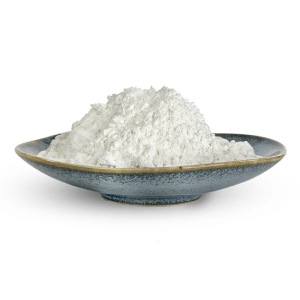
# Starch Sugar: Properties and Applications in Food Industry
## Introduction to Starch Sugar
Starch sugar, also known as glucose syrup or corn syrup, is a sweetener derived from starch through hydrolysis. This versatile ingredient plays a crucial role in the food industry, offering unique functional properties that make it indispensable in various applications.
## Chemical Composition and Properties
Starch sugar primarily consists of glucose, maltose, and higher saccharides. The exact composition depends on the degree of hydrolysis:
Key Properties:
1. Sweetness level: Generally less sweet than sucrose (table sugar)
2. Viscosity: Higher than sucrose solutions at equivalent concentrations
3. Hygroscopicity: Excellent moisture-retention capabilities
4. Fermentability: Highly fermentable by yeast and other microorganisms
5. Freezing point depression: Lowers freezing point more effectively than sucrose
## Production Process
Keyword: Starch Sugar
The manufacturing of starch sugar involves several key steps:
Main Production Steps:
1. Starch extraction: Typically from corn, wheat, or potatoes
2. Liquefaction: Starch is gelatinized and partially hydrolyzed
3. Saccharification: Further breakdown into simpler sugars
4. Purification: Removal of impurities and byproducts
5. Concentration: Evaporation to achieve desired solids content
## Applications in Food Industry
Starch sugar finds extensive use across various food sectors:
Confectionery Products
• Prevents crystallization in candies and chocolates
• Provides smooth texture in caramels and toffees
• Extends shelf life of sugar-based confections
Bakery Goods
• Enhances browning through Maillard reactions
• Improves moisture retention in baked products
• Serves as fermentable substrate for yeast
Beverages
• Provides fermentable sugars in brewing
• Adjusts sweetness and body in soft drinks
• Serves as base for flavored syrups
Dairy Products
• Prevents ice crystal formation in ice cream
• Enhances texture in yogurt and fermented milks
• Improves mouthfeel in flavored milk drinks
## Advantages Over Other Sweeteners
Starch sugar offers several benefits compared to alternative sweeteners:
• Cost-effectiveness: Generally more economical than sucrose
• Functional versatility: Provides multiple technical benefits beyond sweetness
• Process stability: Performs well under various processing conditions
• Customizability: Can be tailored to specific DE (Dextrose Equivalent) values
## Future Trends and Developments
The starch sugar industry continues to evolve with new advancements:
• Development of specialty syrups with specific carbohydrate profiles
• Increased focus on non-GMO and organic starch sources
• Innovation in enzymatic conversion processes for higher efficiency
• Growing demand for clean-label</strong