
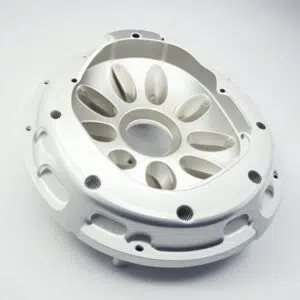
# Precision CNC Machined Components for Industrial Applications
## The Importance of CNC Machining in Modern Manufacturing
CNC machining has revolutionized the manufacturing industry by providing unparalleled precision and repeatability in producing complex parts. Computer Numerical Control (CNC) technology enables manufacturers to create high-quality components with tight tolerances that meet the demanding requirements of various industrial sectors.
## Understanding CNC Machined Parts
CNC machined parts are components manufactured using computer-controlled machine tools that remove material from a workpiece to achieve the desired shape and dimensions. These parts are essential in industries where precision, durability, and reliability are critical factors.
### Key Characteristics of Quality CNC Components:
– Exceptional dimensional accuracy
– Smooth surface finishes
– Consistent repeatability
– High strength-to-weight ratio
– Excellent material properties
## Industries That Rely on CNC Machined Components
Numerous industrial sectors depend on precision CNC machined parts for their operations:
### 1. Aerospace Industry
The aerospace sector requires components with extreme precision and reliability. CNC machining produces critical aircraft parts such as turbine blades, engine components, and structural elements that must withstand harsh operating conditions.
### 2. Automotive Manufacturing
From engine blocks to transmission components, CNC machining plays a vital role in producing high-performance automotive parts that meet strict quality standards.
### 3. Medical Equipment
The medical industry utilizes CNC machined parts for surgical instruments, implants, and diagnostic equipment where precision and biocompatibility are essential.
### 4. Electronics and Telecommunications
CNC machining produces enclosures, heat sinks, and connectors that protect and enhance the performance of electronic devices.
## Advantages of CNC Machined Components
CNC machining offers numerous benefits for industrial applications:
### Precision and Accuracy
CNC machines can achieve tolerances as tight as ±0.0001 inches, ensuring parts meet exact specifications consistently.
### Material Versatility
CNC machining works with a wide range of materials including metals (aluminum, steel, titanium), plastics, and composites.
### Complex Geometries
The technology enables production of intricate shapes and features that would be difficult or impossible with conventional machining methods.
### Scalability
CNC machining efficiently produces both prototypes and high-volume production runs with consistent quality.
## Choosing the Right CNC Machining Partner
When selecting a supplier for CNC machined components, consider these factors:
– Experience with your specific industry requirements
– Quality control processes and certifications
– Material expertise and capabilities
– Production capacity and lead times
– Technical support and engineering assistance
## Future Trends in CNC Machining
The CNC machining industry continues to evolve with advancements such as:
Keyword: CNC machining parts
– Increased automation and robotics integration
– Improved multi-axis machining capabilities
– Enhanced software for design and simulation
– Sustainable manufacturing practices
– Adoption of Industry 4.0 technologies
As industrial applications become more demanding, precision CNC machined components will remain essential for manufacturing high-performance products across various sectors. By understanding the capabilities and benefits of CNC machining, businesses can make informed decisions when sourcing critical components for their operations.